


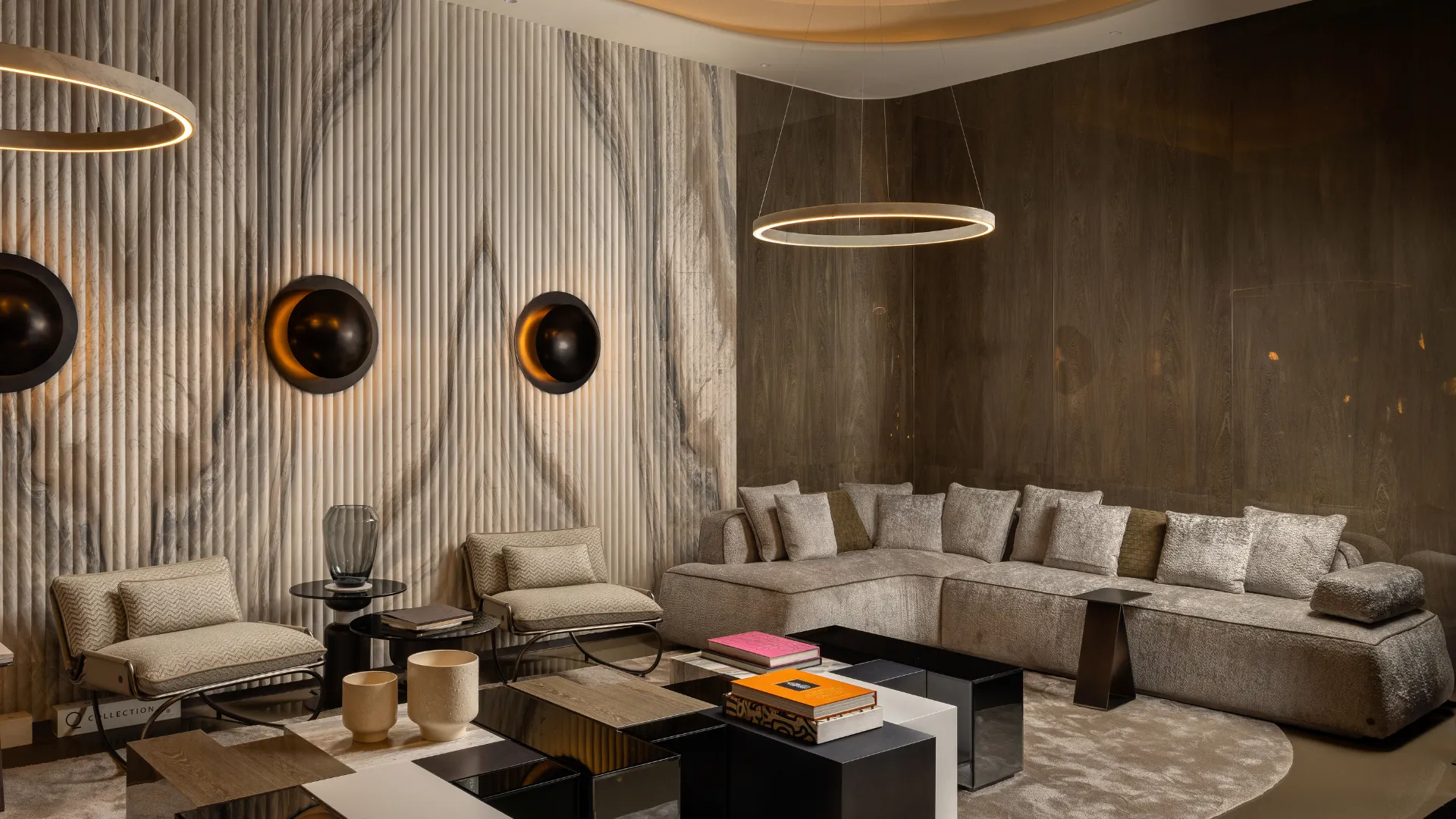
For a long time, furniture in luxury interiors was often treated as a series of statement pieces. A sculptural chair here, a bold table there, each object chosen for its individual impact. While this approach created visual highlights, it often left interiors feeling fragmented rather than composed.
Today, contemporary interiors are moving in a different direction. Instead of relying on isolated hero pieces, designers are increasingly working with cohesive furniture systems that bring continuity across spaces. The focus is no longer just on individual objects, but on how every piece contributes to the overall language of the interior.
Designing with Consistency Across Spaces
Modern homes and hospitality environments are rarely confined to a single room experience. Living areas flow into dining spaces, bedrooms connect to lounges, and the entire environment needs to feel unified.
When furniture follows a structured design system, forms, proportions, and detailing carry through naturally from one space to another. This creates visual clarity and balance, allowing each area to feel connected without becoming repetitive. The result is an interior that feels intentional rather than assembled.
The Role of Material Harmony
Material choices play a central role in achieving cohesion. When surfaces, finishes, and textures are thoughtfully aligned, they create a rhythm that ties different elements together.
Stone, lacquer, glass, and upholstery materials can interact subtly across multiple pieces, creating a layered yet controlled palette. Instead of competing for attention, materials begin to support one another, creating depth without visual noise.
This harmony allows the interior to feel refined and composed.
Moving Beyond Trend-Driven Design
Another reason structured furniture systems are gaining importance is longevity. Interiors designed around individual statement pieces can quickly feel dated as trends change.
Systems, on the other hand, are built around proportion, balance, and material discipline. These qualities tend to age far more gracefully than trend-led styling. When furniture pieces share a common design language, they remain relevant even as surrounding elements evolve.
Designing this way encourages interiors that endure rather than constantly chase what is new.
How Collections Enable This Approach
Furniture collections designed as systems allow designers and architects to build spaces with consistency while still maintaining variety. Shared silhouettes, related proportions, and coordinated materials create a foundation that can adapt to different room functions.
At Diviana, this philosophy is central to how collections are developed. Rather than treating each piece as an isolated product, the intention is to create a design language that flows across living, dining, and bedroom environments. This approach allows furniture to function as part of the architectural composition of a space rather than simply filling it.


