


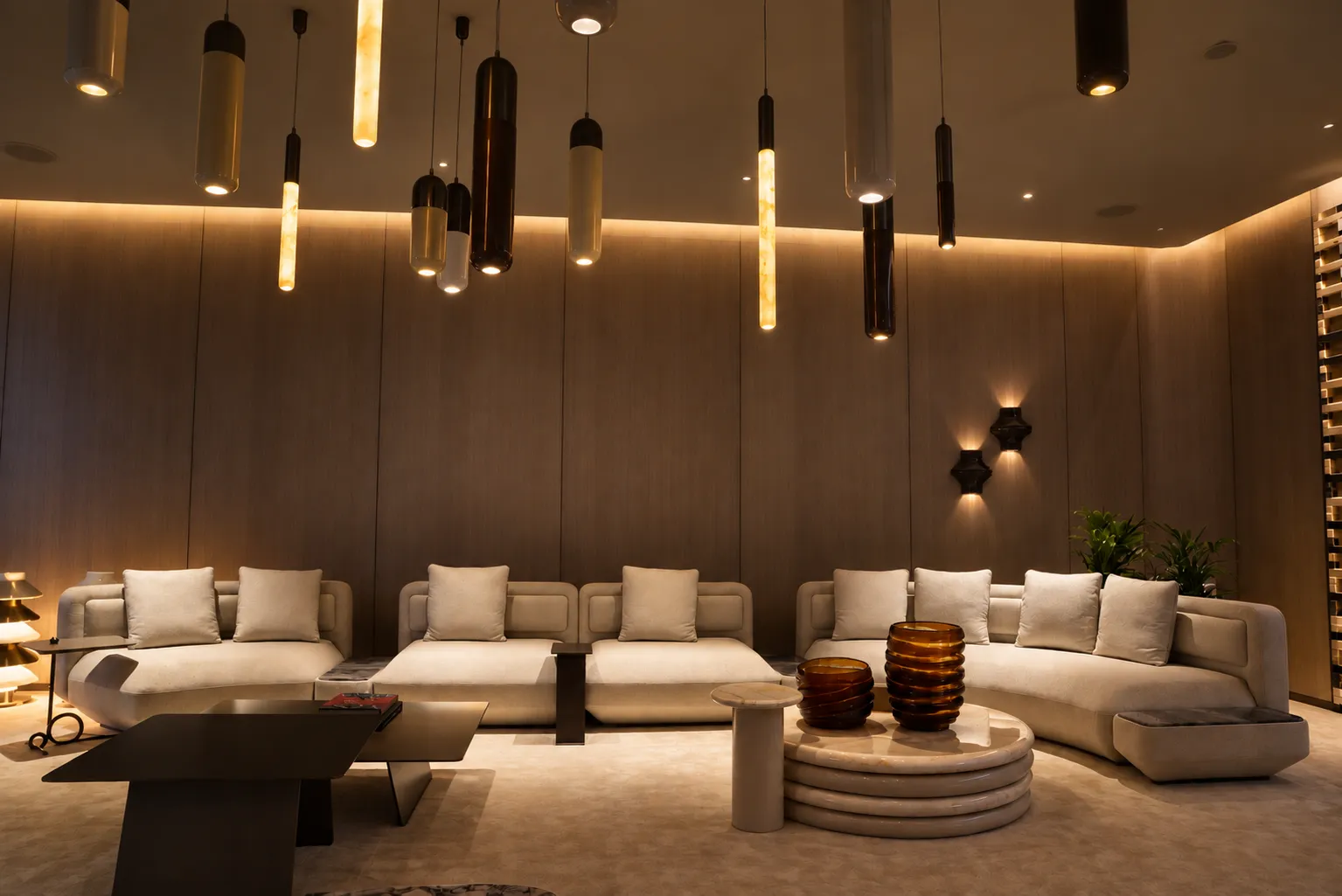
A well-composed interior is not defined by how much it contains, but by how naturally every element relates to the next. Visual balance brings furniture, proportion, material, colour and negative space into a considered relationship. In contemporary interiors, balance can come from symmetry, asymmetry, contrast or the quiet presence of open space
For a luxury furniture brand in India, this understanding of balance is central to creating spaces that feel sophisticated without appearing overworked. Diviana approaches furniture through clean forms, considered proportions and attention to material and detail, reflecting a contemporary Italian design sensibility. The Q Collection, for instance, is defined by modern, minimal and sophisticated forms, while the Sublime Collection explores clean definition, controlled softness and simple colours.
Symmetry Creates Structure
Symmetry introduces a natural sense of order. Two lounge chairs positioned around a coffee table, matching bedside tables framing a bed, or a dining arrangement centred within a room can create visual stability.
This approach works particularly well with contemporary luxury furniture in India, where clean silhouettes and restrained forms allow symmetry to become part of the architecture. The result is structured without feeling rigid.
Asymmetry Adds Character
Balance does not require everything to match. Asymmetry creates movement by bringing together pieces with different sizes, shapes and visual weights.
A generous sofa can be balanced by a sculptural armchair. A substantial coffee table can sit alongside lighter forms. A console can anchor one side of a room while open space balances the other.
This creates opportunities for bespoke furniture designers in Delhi to develop interiors around individual preferences rather than fixed arrangements. For spaces seeking custom luxury furniture collections, variation can become an important part of the overall composition.
Negative Space Creates Breathing Room
Furniture needs space around it to be appreciated. The gap between a sofa and coffee table, the openness beneath a console, or the distance between dining chairs can influence how spacious a room feels.
For premium interior design solutions, negative space is therefore not an empty leftover. It is an active part of the composition. It gives individual pieces room to establish their presence while allowing the interior to remain visually calm.
Visual Weight Shapes the Room
Size is only one part of visual weight. Darker materials, substantial volumes, strong bases and pronounced silhouettes naturally attract attention, while lighter colours, slender structures and open forms tend to feel visually lighter.
Understanding this relationship is particularly relevant when creating high-end interior furniture in India. A substantial sofa may need lighter tables around it, while a sculptural dining table can be paired with softer, more delicate chairs.
Balance as a Design Language
Diviana collections demonstrate how form, material and proportion can work together. The Sublime Collection draws from Italian architecture and interiors of the 1920s and 1930s, while Q Collection focuses on clean lines, soft shapes, textures and sophisticated colours.
For those exploring Italian design luxury furniture, European style furniture India, designer furniture showroom Delhi, or luxury home interiors and furniture, visual balance offers a practical foundation. It allows furniture to become part of the rooms architecture, creating interiors that feel composed, tactile, and quietly refined.


