


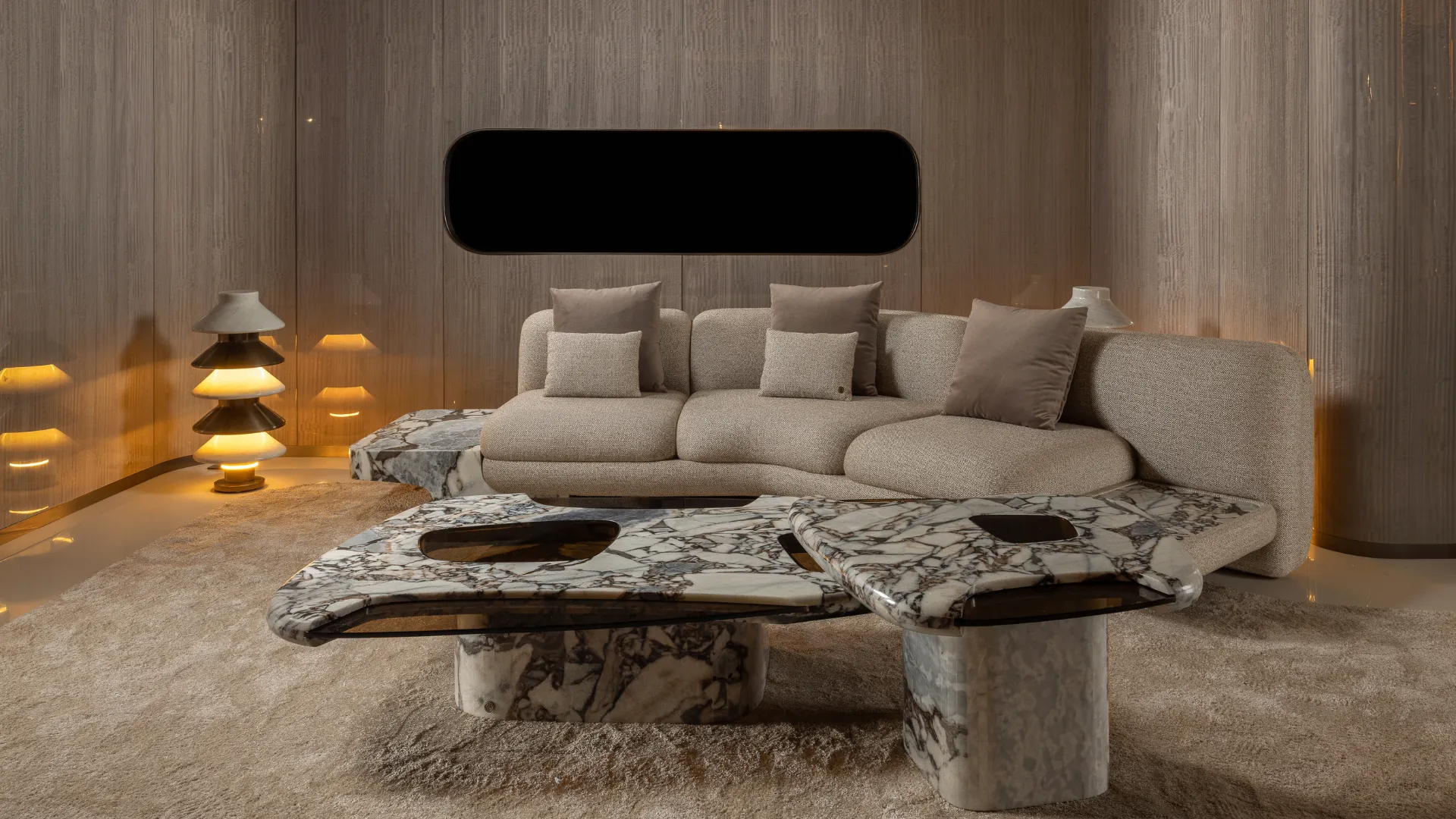
Modern interiors are increasingly defined by the way materials shape a space. Rather than relying on ornament or excessive styling, contemporary design is moving toward surfaces that express clarity, restraint, and intention. Materials such as stone, glass, and lacquer have become central to this shift, forming a refined vocabulary that defines many luxury interiors today.
Each material brings its own character. Stone introduces permanence and depth. Glass offers transparency and lightness. Lacquer provides smooth, controlled surfaces that reflect light and create visual precision. When these materials are thoughtfully combined, they create spaces that feel layered and balanced without becoming visually overwhelming.
How Materials Interact Visually
One of the defining qualities of contemporary interiors is the interaction between materials rather than the dominance of a single element. Instead of isolated surfaces, designers are creating compositions where materials complement one another.
Stone often acts as the grounding element within a space. Its natural texture and weight bring stability to the overall composition. Glass introduces visual openness, allowing light to pass through and soften the presence of heavier forms. Lacquer, with its refined finish, sits between these two extremes, offering a polished surface that reflects light while maintaining structural clarity.
Together, these materials create a subtle dialogue within the interior.
Reflective and Solid Surfaces
The balance between reflective and solid surfaces is essential in shaping modern luxury spaces. Solid materials such as stone establish visual weight and permanence. Reflective materials like glass and lacquer introduce brightness and movement.
This contrast allows interiors to feel dynamic without relying on excessive decoration. Light travels across lacquered surfaces, glass captures surrounding reflections, and stone anchors the composition with its tactile richness.
The interplay between these surfaces creates rhythm and depth throughout the space.
Layering Transparency with Mass
Glass plays an important role in contemporary interiors because of its ability to introduce transparency within structured environments. When paired with dense materials such as stone, it allows spaces to feel lighter while still maintaining a strong architectural presence.
Layering transparent and solid materials creates depth and visual interest. A glass surface may soften the visual weight of stone elements, while lacquer adds a smooth transitional layer that connects the two.
This balance between transparency and mass is often what gives modern interiors their quiet sense of sophistication.
Creating Contrast Without Clutter
Luxury interiors today are increasingly defined by restraint. Instead of filling spaces with numerous decorative objects, designers are focusing on fewer materials used with greater intention.
Stone, glass, and lacquer naturally create contrast through their textures, finishes, and visual weight. The richness of stone, the reflective quality of lacquer, and the clarity of glass introduce variety without disrupting the calmness of the space.
When these materials are carefully layered, they create interiors that feel composed and refined rather than crowded.
Material as a Design Language
In contemporary design, materials are no longer simply functional components. They have become the primary language through which interiors communicate identity and atmosphere.
At Diviana, this material-led approach plays a central role in shaping furniture and interior elements. By exploring the interaction between stone, glass, and lacquer, designs are developed to complement architectural spaces while maintaining a sense of clarity and balance.
As modern interiors continue to evolve, it is becoming clear that the future of luxury design lies not in complexity, but in thoughtful material composition. Through careful combinations of surface, reflection, and structure, materials themselves become the defining element of contemporary interiors.


