


Minimalism is often misunderstood as an exercise in reduction. White walls, empty rooms, and the absence of detail have long defined its visual language. Yet the most enduring interiors are rarely characterised by what is removed. They are defined by what remains.
Today, modern minimalism is evolving into something more refined. It is no longer about creating spaces that feel sparse, but about creating environments where every element has clarity, purpose, and presence.
A well-resolved interior does not feel empty. It feels complete.
Material as Character
Materials shape the atmosphere of a space long before decoration enters the conversation.
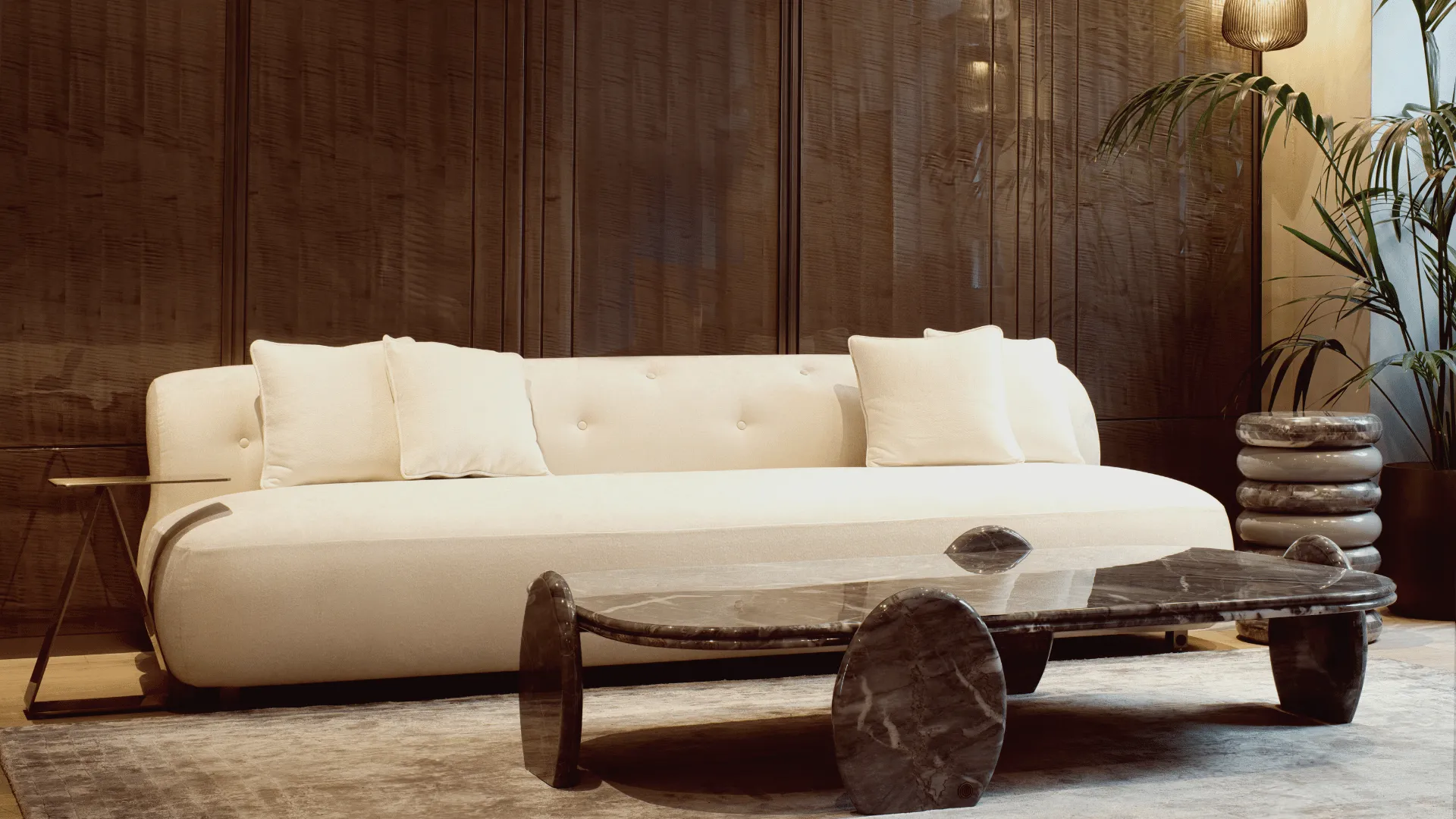
Natural stone reveals movement through its veining. Wood carries warmth through its grain. Leather develops richness with time. Metal introduces precision and contrast. Each material contributes its own identity, allowing an interior to feel layered without becoming excessive.
When materials are selected with intention and allowed to express their inherent qualities, they bring depth that requires no embellishment. The result is a space that feels composed, tactile, and enduring.
The Quiet Role of Texture
In contemporary minimalist interiors, texture becomes a defining element.
Soft upholstery, brushed metals, natural stone, woven surfaces, and refined finishes create visual depth while maintaining restraint. They engage the senses subtly, adding richness without competing for attention.
Light further transforms these surfaces throughout the day. Stone reflects it differently from fabric. Matte finishes soften it. Textured materials absorb and diffuse it. These subtle shifts create an interior that feels alive, even in its quietest moments.
Craftsmanship as Foundation
Minimalism leaves little room for distraction. Every detail becomes visible.
The precision of a seam, the transition between materials, the balance of proportions, and the resolution of a curve all contribute to the overall experience of a piece. These details may not announce themselves immediately, yet they define how furniture is perceived and appreciated over time.
At DIVIANA, craftsmanship is not an addition to the design process. It is the foundation of it. Every collection is shaped through material honesty, considered proportions, and meticulous execution. The objective is never decoration for its own sake, but refinement through thoughtful design and precision.
This philosophy continues to define both the Sublime Collection and the Q Collection, where contemporary forms are balanced with careful attention to materials, details, and lasting comfort.
Furniture as Spatial Architecture
Furniture does more than serve a function. It influences how a space is experienced.
A sofa establishes rhythm within a room. A dining table creates a natural point of gathering. An armchair introduces focus and balance. The relationship between these elements shapes movement, proportion, and visual harmony.
Rather than filling a room with objects, modern minimalism considers how each piece contributes to the overall composition.
The strongest interiors are often built on this sense of relationship between form, scale, material, and space.
Modern minimalism is not defined by absence. It is defined by intention.
When material, craftsmanship, and proportion are given equal importance, interiors acquire a sense of depth that extends beyond aesthetics. They become spaces that feel calm, refined, and enduring.
At Diviana, this approach continues to guide every collection. Through carefully considered forms, exceptional materials, and meticulous craftsmanship, each piece is designed to contribute meaningfully to the spaces it inhabits.
The most memorable interiors rarely demand attention. They achieve something far more lasting: a sense of balance, clarity, and quiet sophistication.


