


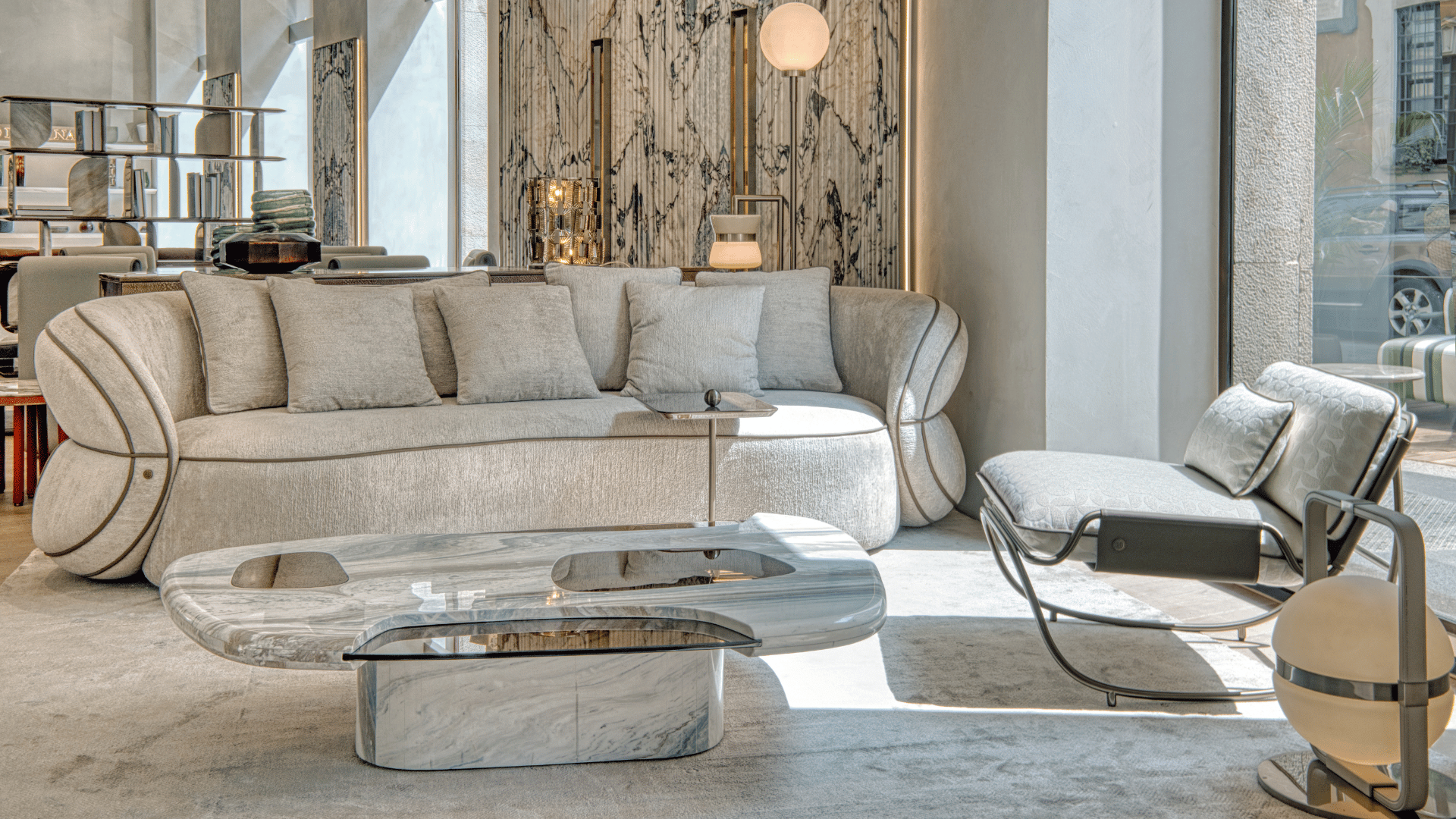
The show ends, but the piece stays.
Once removed from a staged setting, furniture begins to reveal its real character. It is no longer viewed from a single angle or under controlled light. It is lived with. Walked around. Seen in passing. This is where proportion becomes honest. A sofa is read against the length of a wall, the height of a window, and the way the body moves around it. It either sits with ease, or it feels out of place.
Space plays an equal role. What surrounds a piece is not empty. It shapes how the piece is understood. The distance between objects, the pause around a chair, the openness around a table, these decisions define the room as much as the furniture itself.
There is a reason quieter forms endure. Not because they are minimal, but because they are resolved. Lines are clean, but not rigid. Curves are soft, but controlled. Materials are chosen for how they age, not just how they appear. Nothing is excessive, yet nothing feels lacking.
This thinking carries forward into the outdoors.
With Diviana’s outdoor pieces, the setting opens up. There are no walls to contain proportion, no fixed light source. A chair is first seen from across the space. A table holds its presence through shifting daylight. Surfaces respond differently. Textures soften, tones deepen, edges blur slightly under natural light.
The language remains consistent. Smooth forms, balanced geometry, and a quiet sense of order, principles that define the Q Collection, extend into these outdoor settings. Pieces are designed to feel composed, whether placed within an interior or under open sky.
At Diviana, this is where craftsmanship becomes essential. Not in excess, but in precision. The line of a stitch. The way fabric sits over form. The meeting of materials at an edge. These are small decisions, but they shape how a piece holds over time. The same attention to material quality and tailored detailing seen across collections carries through, quietly but consistently.
From modern luxury furniture to outdoor living, the intention remains clear. Create pieces that do not rely on setting to feel complete. They arrive as objects.They remain as part of the space.


